Public space and placemaking
Experience, design, and stewardship are increasingly part of the same job.
When downtown teams talk about public space now, they are rarely talking only about beautification or event programming. The more useful frame is how public space functions in daily life, and what it asks of the systems around it.
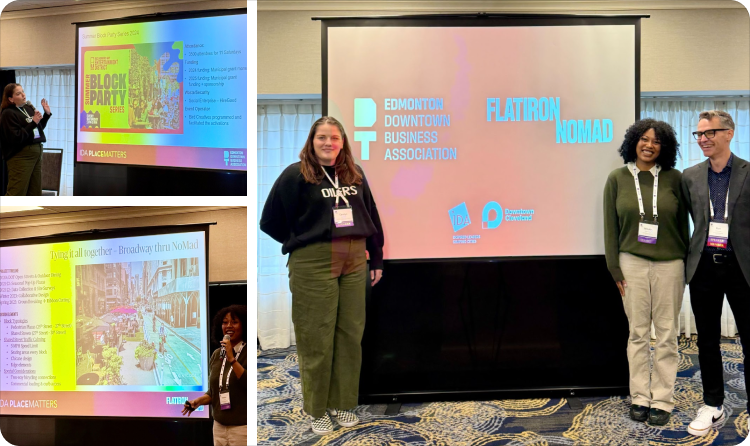
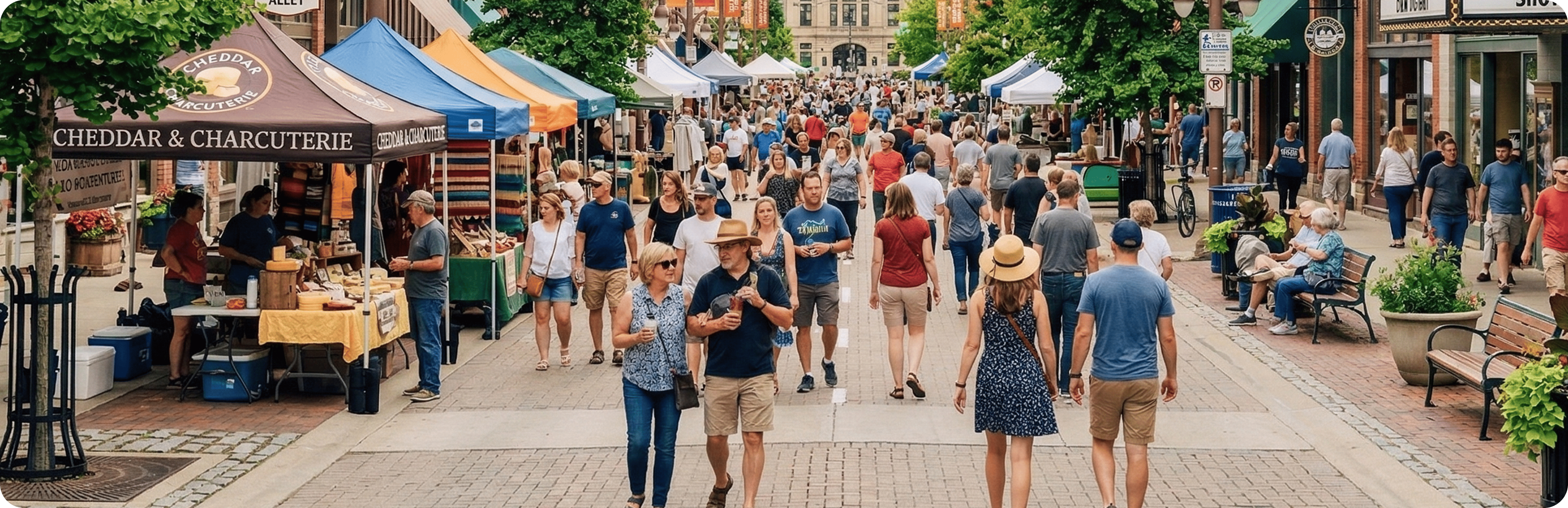
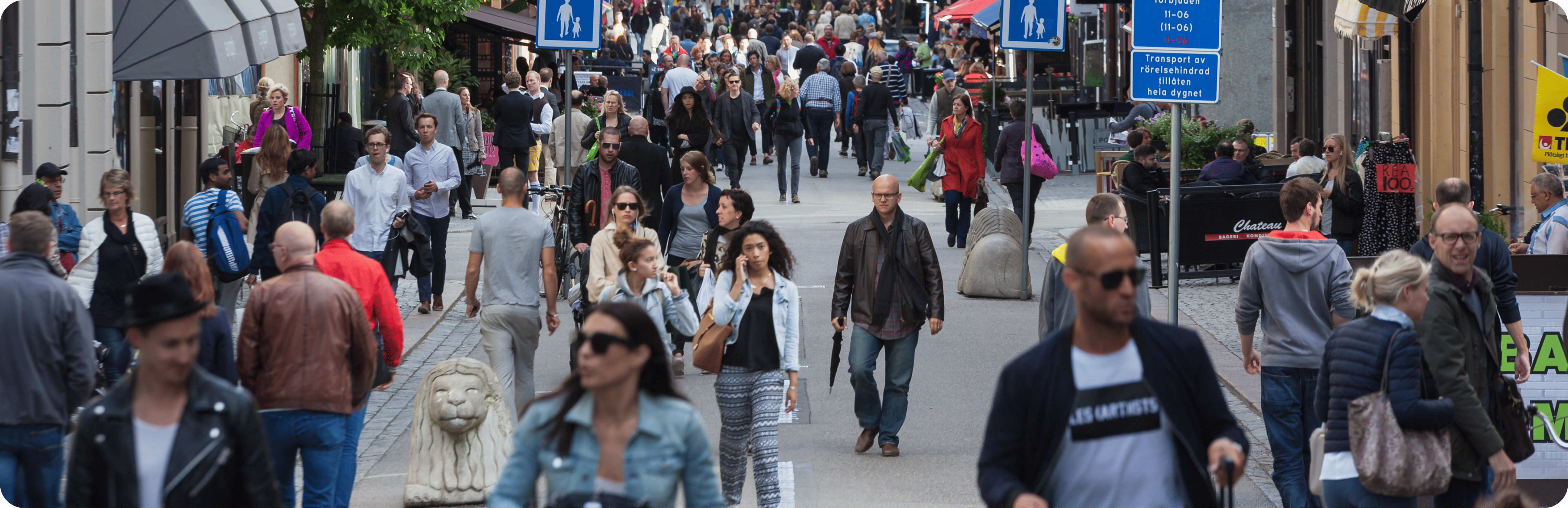
That came through in conversations about open streets, entertainment districts, and placemaking efforts that turned underused spaces into active destinations. Business buy-in, permitting, operations, safety, and maintenance all sat close to the center of those examples. The visible outcome may be a more inviting street or a better-used plaza, but the work behind it is much more coordinated than that single image suggests.
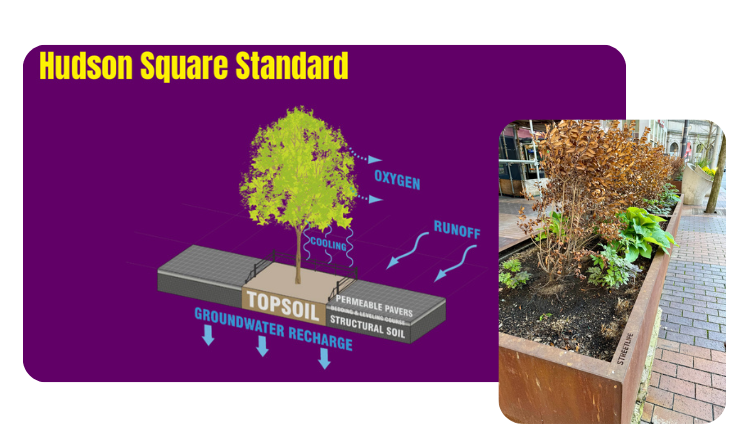
A similar lesson appeared in the green infrastructure session, where tree care and environmental stewardship pointed to the same larger truth. Places feel cared for when someone is caring for them consistently. Whether the investment is in streets, lighting, landscaping, or tree health, the effect is cumulative. It changes how the district is experienced over time.
This matters because the public experience of a downtown does not separate design from operations. Visitors do not experience those things as distinct categories. They experience a place that either feels intentional, welcoming, and well run, or one that does not.
What this suggests
Public space works best when the visible layer and the operating layer move together.
Many of the strongest examples in Cleveland shared this quality. The programming, design, and day-to-day systems were supporting one another rather than pulling in different directions.
- Where are we still treating public space, operations, and economic outcomes as separate conversations?
- What investments are improving experience on paper, but are still under-supported operationally?
- Which places in the district already show what better coordination could look like?