Three days at the Hyatt Regency San Francisco. Hundreds of downtown leaders in the same room. The West Coast Urban District Forum 2025 was the kind of gathering where the conversations in the hallways are just as valuable as the ones on stage. Here are three sessions that genuinely shifted how we think about the work.
WCUDF 2025 brought together leaders from across the West Coast and beyond to exchange ideas about what is working, what is not, and where downtown management is heading. The conversations were candid, the sessions were substantive, and the energy in the room reflected just how much people care about getting this work right.
For our team, it was a chance to reconnect with people we know and meet those we had only heard of. It was also a reminder that the challenges most districts face, managing resources with lean teams, making the case for public investment, adapting to rapid change, are shared ones. The solutions being developed across the country deserve wider attention.
Three sessions stood out as particularly worth carrying back into daily work. Each one addressed a different dimension of downtown management, and together they paint a picture of what forward-thinking districts are doing differently.
The session opened with a premise that some in the room found surprising: the question for downtown districts is no longer whether to use AI, but how to use it well. Cities across the country are already deploying AI tools for operations, communications, and economic analysis, and the districts that are getting the most value from them are those that went in with a clear sense of what they wanted the technology to do.
Event planning is one of the most immediately practical applications. AI tools can analyze attendance trends, community feedback, and local patterns to suggest programming that is more likely to engage the specific audience a district is trying to reach. Rather than relying on gut feel or historical precedent alone, districts can bring real data into decisions about what to program and when.
Content production is another area where districts are saving meaningful time. Newsletters, social posts, and stakeholder updates that used to take hours to draft can be produced in a fraction of the time, with the human role shifting from writing to editing and refining. That shift frees up capacity for the relationship work that cannot be automated.
On the economic side, AI tools are helping districts track business trends and identify where support is needed before problems become visible to the naked eye. A storefront that is struggling shows up in the data before it shows up as a vacancy, giving district teams a window to intervene. Hiring processes have also benefited, with AI helping to screen candidates faster and surface stronger matches for specialized district roles.
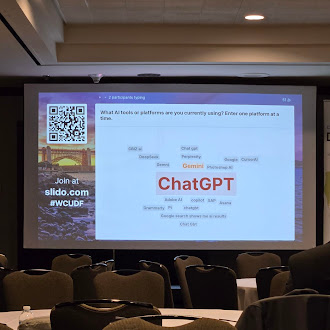
Transparency was the consistent thread running through the entire session. Because districts operate in the public realm and manage public records, any AI tool they use needs to be held to the same standards of accountability that govern the rest of their work. That means being clear about what data AI tools access, how outputs are reviewed before they are acted on, and how the public can trust that AI-assisted decisions reflect genuine community interests rather than algorithmic convenience.
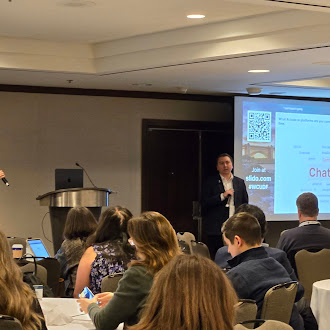
AI offers real efficiency gains for downtown operations, but districts must ensure their use of it complies with public record laws and maintains the transparency that community trust depends on.
The efficiency gains from AI tools depend on having clean, centralized data to work from. District360 keeps your properties, contacts, events, and service records in one place, so when you are ready to put technology to work, the foundation is already there.
See how it works →This session addressed something that most district leaders feel but rarely have space to discuss openly: the pressure to keep everything running while also planning for an uncertain future. Emilie Cameron and Austin Metoyer spoke with real candor about how their organizations have built the kind of structural resilience that allows them to absorb shocks without losing direction.

Revenue diversification was the first concrete strategy. Districts that depend heavily on a single funding source, whether that is assessment income, a major anchor institution, or a government grant, are structurally vulnerable in ways that districts with diversified income are not. The most resilient organizations have built portfolios that include earned income, competitive grants, and private sponsorships alongside their assessment base, and they treat that diversification as an ongoing discipline rather than a crisis response.
Board engagement came up as a recurring theme. Boards that are involved in strategic planning from the beginning, rather than presented with a finished plan for approval, develop a fundamentally different relationship with the plan's objectives. They defend it more consistently, apply it more confidently, and are far more useful when priorities need to shift quickly. Early engagement turns a governance document into a shared commitment.
The concept of using a strategic plan as a decision filter was perhaps the most actionable idea in the session. When a new opportunity or request arrives, the first question should be whether it serves the plan's priorities. Districts that skip this step tend to drift, taking on projects that consume resources without advancing their core mission. A plan that functions as a filter is not a constraint; it is a time-saving device that protects the team from scope creep.
Strong strategy is not a document filed away after an annual retreat. The best districts use their strategic plans as active tools, making them the first reference point for decisions, resource allocation, and stakeholder conversations.
The final session reframed what public space management actually means for a modern downtown district. Gabriel Yeager and Rich Mongarro made a case that the goal is not clean and safe streets, as important as those are, but destinations. The question is not whether people feel safe enough to walk through a space; it is whether they choose to spend time there.
Public-private partnerships emerged as the most reliable mechanism for funding the kind of infrastructure and activation that transforms a maintained space into a desirable one. Private investment unlocks possibilities that assessment income alone cannot support, and it aligns business interests with public outcomes in ways that tend to sustain momentum. The districts with the most vibrant public spaces have almost all found a private partner willing to co-invest in the vision.
Technology was discussed in practical terms. Mobile reporting tools allow field staff to log issues, track response times, and surface patterns that inform resource allocation. AI-powered safety monitoring is beginning to complement ambassador programs in some districts, providing a layer of situational awareness that extends the reach of teams that are stretched thin. The technology does not replace the human presence; it makes the human presence more effective.
The session closed with a discussion of community-driven programming, and the Oakland Chinatown night market was cited as a particularly strong example. Events that grow from the community itself, rather than being designed for the community from the outside, generate a different quality of engagement. Attendance figures for community-originated events tend to be stronger, repeat visitation is higher, and the economic benefit to nearby businesses is more direct. The implication for programming teams is that the planning process matters as much as the event itself.
Vibrant downtowns are built through a combination of strategic partnerships, technology-enabled operations, and programming that comes from genuine community participation. Maintaining a space is necessary but not sufficient; activating it is what brings people back.
The districts doing the most interesting work are not necessarily the best-resourced ones. They are the ones making deliberate choices about where to focus, what tools to use, and how to build the kind of community investment that sustains a downtown through difficult periods. WCUDF 2025 was a reminder that those choices are available to every district team willing to make them.
District360 supports the operational foundations that make all three of these themes possible: centralized data for AI readiness, reporting tools for public space management, and the kind of clean stakeholder records that strategic planning depends on. We would be glad to show you how.
We are happy to share what is working for others.
Talk To An Expert